Cats are especially susceptible to parasites that can affect their digestion. As a pet owner in New York, you probably know about local health concerns for animals. In a city where indoor and outdoor spaces often blend, it’s crucial to regularly deworm your cat to keep them safe from harmful parasites that could cause serious health issues.
Deworming is essential for your cat’s well-being because it prevents the spread of parasites such as roundworms, tapeworms, and hookworms. These parasites can cause problems like weight loss or even more serious health damage to organs. This guide provides clear information about deworming your cat, including potential risks and how to keep your pet healthy.
What is Cat Deworming?
Deworming your cat involves giving medications to eliminate common intestinal parasites that can affect cats of any age. These parasites are often contracted from the environment and can cause symptoms such as vomiting, diarrhea, and fatigue. The medication works by killing or disabling the worms, allowing your cat to expel them naturally.
In New York, where city life meets outdoor spaces, regular deworming is key to protecting your cat from internal parasites. While many pet owners focus on flea and tick prevention, deworming is equally vital for your cat’s health and well-being.
Common Parasites in Cats
Cats are vulnerable to various types of worms, and knowing which parasites they may face can help in the prevention and treatment process:
- Roundworms: One of the most common parasites found in kittens and adult cats alike. Cats can ingest roundworm eggs from contaminated food, water, or soil.
- Tapeworms: These flatworms attach to the intestinal walls and are often transmitted through fleas or infected rodents.
- Hookworms: These are less common but still dangerous, causing severe blood loss. They usually occur from ingesting infected larvae from the environment.
- Whipworms: While less common in cats, they can still cause gastrointestinal problems and may require targeted deworming.
Knowing the types of worms that can infect your cat helps ensure you use the proper treatment. Your vet can guide you through the process and recommend the best deworming schedule for your cat.
How to Safely Deworm Your Cat?
Deworming your cat safely is essential and should be done correctly. Always follow your veterinarian’s instructions and avoid giving medication without professional guidance. Here’s what you need to know:
- Consult Your Vet: Before beginning any deworming treatment, consult your veterinarian. They will conduct a fecal examination to identify the type of parasite present in your cat.
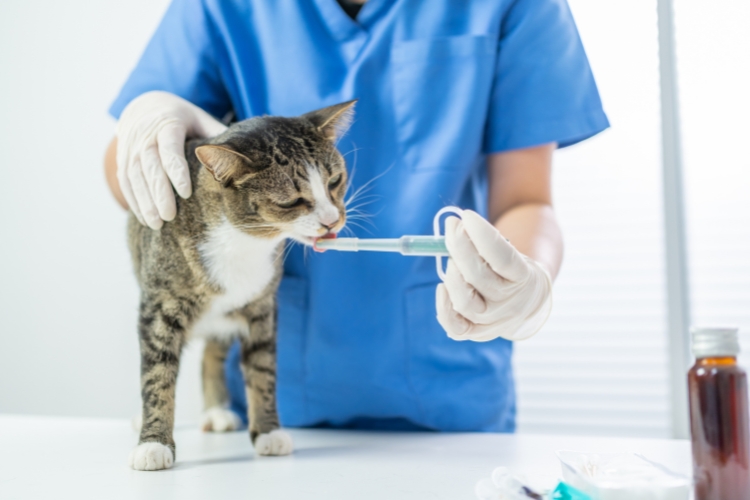
- Choose the Right Medication: Deworming medications come in various forms, such as tablets, liquids, and topical applications. Your veterinarian will recommend the appropriate type based on factors such as your cat’s age, weight, and overall health.
- Administer the Medication: Follow your veterinarian’s instructions carefully when giving medication to your cat. For tablets, hiding them in food or using a pill popper can help ensure your cat receives the full dose.
- Follow the Treatment Schedule: Most cats need several treatments to eliminate parasites. Your veterinarian will create a schedule tailored to your cat’s specific needs.
- Prevention: Keeping your cat’s living space clean and cleaning the litter box regularly can help prevent future infections.
Symptoms of Worm Infections in Cats
Knowing the signs of worm infections in cats will help you recognize if your feline needs deworming treatment. Some common symptoms include:
- Vomiting and Diarrhea: Worms often cause digestive upset, leading to vomiting or diarrhea.
- Weight Loss: Despite eating normally, your cat may lose weight due to worm infestations.
- Visible Worms in Feces or Vomit: Tapeworms can sometimes be seen in your cat’s feces or around the anus.
- Lethargy and Poor Coat Condition: If your cat seems more tired than usual and has a dull coat, it could be a sign of a parasitic infection.
If you notice any of these signs, it’s crucial to schedule a vet visit to get your cat tested and dewormed.
Keep Your Cat Healthy
Deworming is an important step in keeping your cat healthy and avoiding serious health problems caused by intestinal parasites. Regular deworming, combined with good hygiene and regular veterinary visits, helps protect your cat from harmful worms. If you’re a cat owner in New York, it’s essential to prioritize your feline friend’s health by preventing parasite infestations.
At Pure Paws Veterinary Care, we provide comprehensive cat deworming services to ensure your cat stays healthy and happy. Contact us today to schedule an appointment and learn more about how to protect your cat from parasites.
FAQs
Q1. Is deworming safe for my cat?
Ans. Yes, deworming is generally safe when done under veterinary guidance. Always follow the dosage and schedule your vet provides to ensure safe and effective treatment.
Q2. How often should I deworm my cat?
Ans. The frequency of deworming depends on your cat’s lifestyle and risk factors. Kittens typically need deworming every two weeks, while adult cats should be dewormed annually or as recommended by your vet.
Q3. What are the different types of worms in cats?
Ans. Common types of worms in cats include roundworms, tapeworms, hookworms, and whipworms. Each type requires different treatment, which is why a vet diagnosis is essential.
Q4. How can I prevent worm infestations in my cat?
Ans. To prevent worm infestations, keep your cat indoors, control fleas, and regularly clean their litter box. Follow your vet’s advice on deworming schedules and hygiene.
Q5. Can indoor cats get worms?
Ans. Yes, even indoor cats can get worms if they ingest contaminated food or if fleas enter the home. Regular deworming is essential, even for indoor-only cats.