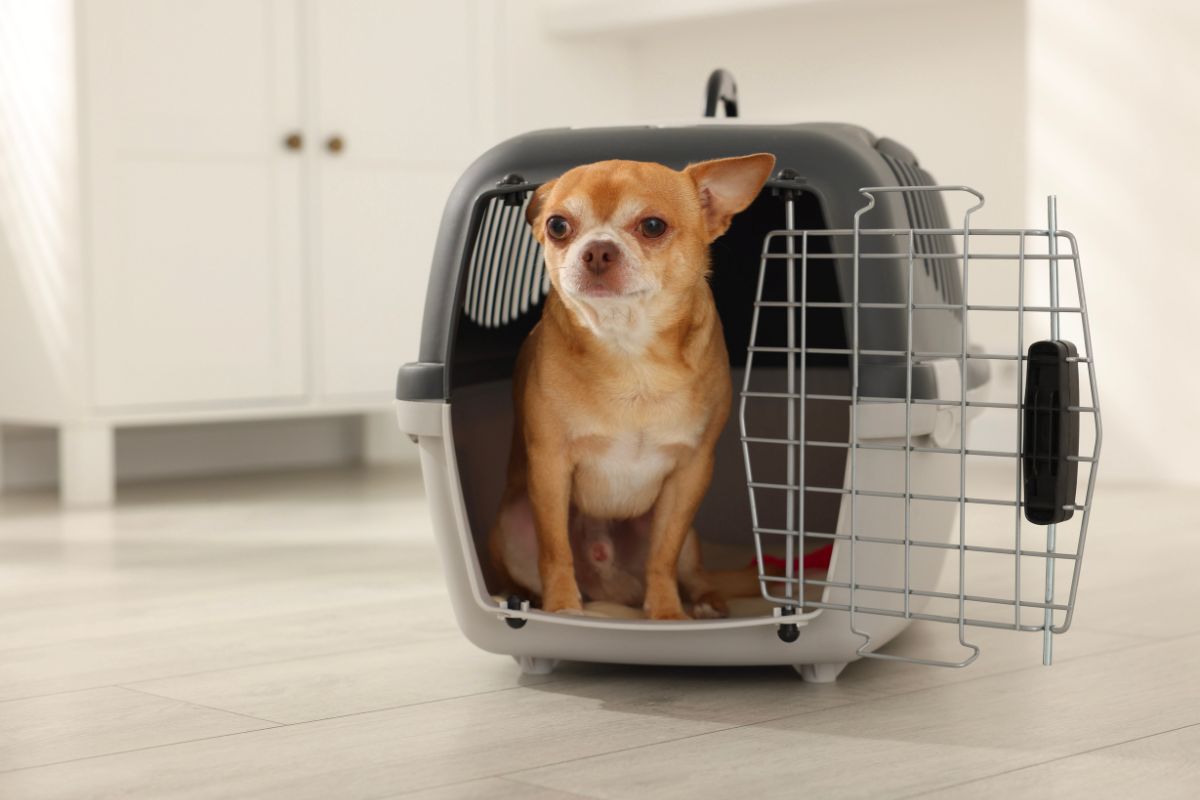
For dog owners in New York City, the question often arises: Can my beloved furry friend join me on the subway? The answer, thankfully, is a resounding yes, with some crucial caveats. The NYC subway, a lifeline for millions, can also be a surprisingly dog-friendly mode of transport – provided you know and follow the rules.
Navigating the bustling underground world with your canine companion requires preparation, adherence to MTA regulations, and a healthy dose of common sense. Let’s break down everything you need to know to make your subway journeys with your dog smooth and stress-free.
The Golden Rule: Enclosed and Contained
The most critical regulation to understand is enshrined in the MTA’s Rules of Conduct, Section 1050.9(a): “No person may bring any animal on or into any conveyance or facility unless enclosed in a carrying case.”
This isn’t a suggestion; it’s a hard-and-fast rule. Your dog must be entirely enclosed in a carrier, bag, or crate. This means no leashed dogs, no dogs sticking their heads out of backpacks, and certainly no dogs simply walking beside you. The carrier must be secure enough to prevent escape and ensure the animal cannot bother other passengers.
The MTA doesn’t specify a size limit for the carrier, but practicality dictates common sense. You need to be able to comfortably carry your dog and their carrier through turnstiles, down stairs, and onto crowded trains without obstructing doorways or pathways. If your carrier is too large to manage easily, it’s likely too large for the subway.
What About Service Animals?
It’s important to differentiate. The “enclosed and contained” rule does not apply to service animals as defined by the Americans with Disabilities Act (ADA). Service animals, which are individually trained to do work or perform tasks for people with disabilities, are permitted on the subway and in all MTA facilities, even if not in a carrier. They must, however, be leashed or otherwise under the handler’s control. Emotional support animals, on the other hand, are generally subject to the same rules as pets and must be in a carrier.
Choosing the Right Carrier: Comfort Meets Compliance
Investing in the right carrier is paramount. Consider:
- Size: Your dog should be able to stand up, turn around, and lie down comfortably within the carrier. Cramped conditions are not only inhumane but can also make your dog anxious.
- Ventilation: Ensure adequate airflow to prevent overheating, especially during warmer months.
- Security: Zippers and latches should be robust to prevent accidental opening and escape.
- Portability: Backpack-style carriers or carriers with wheels can be a lifesaver for longer journeys or heavier dogs.
- Material: Opt for durable, easy-to-clean materials in case of accidents.
Many New Yorkers with larger dogs have become adept at using oversized duffel bags or specialized soft-sided carriers that allow their dogs to curl up discreetly inside. The key is that the dog is fully out of sight and cannot easily get out.
Pre-Subway Prep: Making the Journey a Success
- Potty Break: Always, always, always take your dog for a thorough potty break before heading to the subway. Accidents happen, but minimizing the risk is crucial for a pleasant journey for everyone.
- Exercise: A tired dog is a good subway rider. A good walk or play session beforehand can help your dog relax and even nap during the ride.
- Comfort Items: A familiar blanket or toy in the carrier can provide comfort and reduce anxiety.
- Hydration: On longer trips, bring a small water bottle and a collapsible bowl.
- Positive Reinforcement: If your dog is new to the subway, introduce the carrier gradually and make it a positive experience with treats and praise. Start with short, off-peak trips to acclimate them to the sights, sounds, and movements.
- Avoid Rush Hour: This is perhaps the most important tip. Even with your dog in a carrier, crowded trains during peak hours can be incredibly stressful for both of you. Aim for off-peak times (mid-mornings, afternoons, late evenings) when trains are less packed.
On the Subway: Be a Courteous Canine Commuter
- Mind the Gap: Be extra cautious when boarding and exiting trains. The gap between the platform and the train can be a hazard.
- Stow Your Carrier Safely: If possible, place your carrier on your lap or between your feet to keep it out of the way. Avoid placing it on empty seats during crowded periods.
- Be Prepared for Questions (and Compliments!): Many New Yorkers are dog lovers and may be curious or offer compliments. Be friendly and prepared to answer questions.
- Accident Preparedness: Despite your best efforts, accidents can happen. Carry a small “accident kit” with paper towels, wet wipes, and a plastic bag. Clean up immediately and discreetly.
The Bottom Line
Taking your dog on the NYC subway is not only permissible but can be a convenient way to explore the city with your furry companion. By understanding and adhering to the MTA’s “enclosed and contained” rule, choosing the right carrier, and preparing your dog for the journey, you can unlock a whole new level of urban adventure together. So, next time you’re planning an outing, consider bringing your best friend along for the ride – remember their comfy, compliant carrier!